
The Challenge: Mehmood Booti’s Legacy of Waste
For many years, the Mehmood Booti site was a big landfill for Lahore waste, with mountains of garbage and a hot spot for pollution and health hazards. Its existence resulted in air contamination, groundwater pollution, and a deterioration of the quality of life for the communities around it. The call for a sustainable solution was dire.
RUDA’s Vision for Sustainability
Due to its interest in sustainable urban space, RUDA selected Mehmood Booti as a site for redevelopment. The Authority aimed to convert the dump site into a green area to meet environmental concerns, recreation, and social amenities for the city’s citizens.
Transformation Process
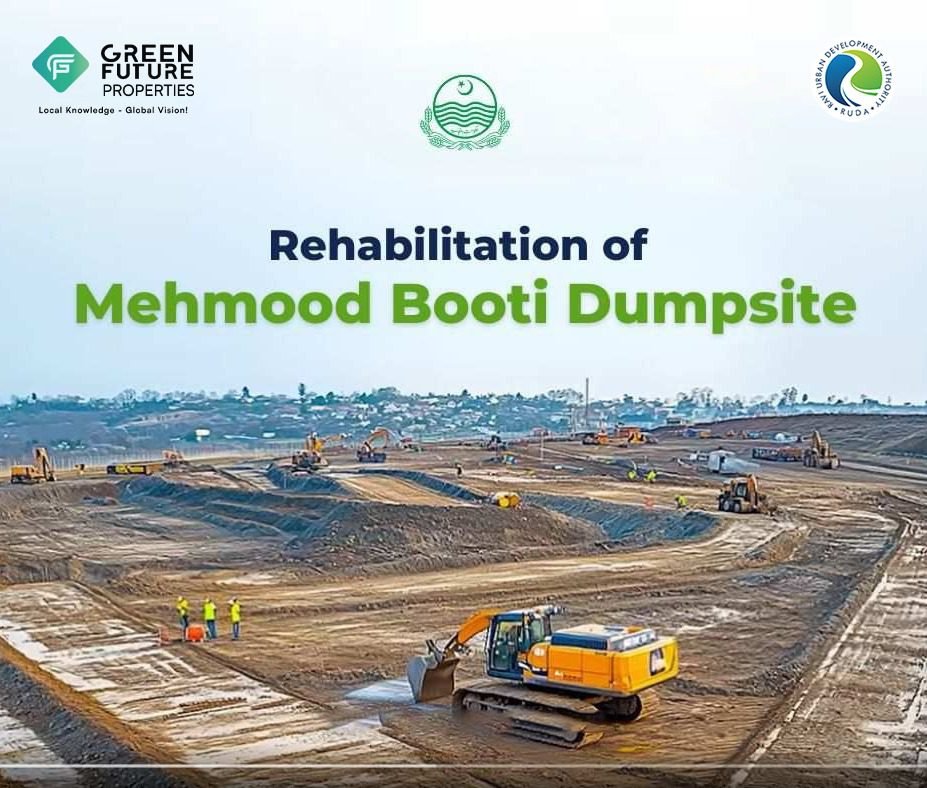
Land Remediation: This was the first step as tons of waste were cleared and the land rehabilitated using modern techniques such as soil remediation and capping a landfill.
Greening the Place: Planting native plants, trees, and grass would help revive nature and improve air quality.
Recreational Spaces: Walking tracks, benches, and landscaped gardens were created to offer residents a haven from urban mayhem.
Eco-Friendly Infrastructure: Solar-powered lights and water-saving irrigation systems have been installed, keeping up with RUDA’s green city vision.
Benefits of the Transformation
Environmental Impact: Reducing pollutants has enhanced air quality and decreased health hazards for populations.
Urban Aesthetics: After redevelopment, an eye sore has transformed into a picturesque location, elevating the overall engagement. Recreation and social activities have found a hub in this space and provide a sense of belonging for people.
This project will stand as an inspiration for similar projects in all of Pakistan.
RUDA and the Greener Tomorrow
RUDA’s work at Mehmood Booti is a great example of how urban transformation projects can really help build more livable cities by turning waste into opportunity, solving a growing environmental issue, and showcasing how ideas and commitment can redefine urban spaces.