Rapid urbanisation, funding gaps, and escalating construction costs have combined into a structural fault line. With stagnant household incomes and rising land prices, affordable housing in Pakistan has become one of the most urgent unmet needs. These figures are not merely statistical—they represent insecurity, shrinking living space, and a generation uncertain about its urban future.
Housing Deficit Reality Check: A Permanent Crisis
Recent data shows that the Pakistan housing crisis has deepened steadily over the past decade. Population growth continues to outpace formal housing supply, while planning and regulatory frameworks remain outdated. The issue is no longer cyclical—it is structural.
Pakistan’s Long-Term Housing Deficit
| Year | Estimated Deficit |
|---|---|
| 2010 | 4.4 million |
| 2015 | 9 million |
| 2018 | 10 million |
| 2025 | 11–12 million |
| 2026 (projected) | 12–13 million |
If delays in reform persist, the Housing Deficit 2025 will evolve into a generational crisis.
Why the Housing Crisis in Pakistan Keeps Worsening
Rapid Urbanisation
Pakistan is urbanising at an unprecedented pace. Nearly 40% of the population now lives in cities, up from 32% in 1998, and projections suggest this figure will exceed 50% by 2030. This pressure is pushing the housing shortage in Pakistan to new limits.
Major cities—Karachi, Lahore, Islamabad, Faisalabad, Multan, Peshawar, and Sialkot—are unable to meet demand. As a result, millions search for low-cost options that simply do not exist, making affordable housing in Pakistan increasingly inaccessible.
Income Growth vs Property Prices: An Impossible Gap
While incomes have grown modestly, housing prices have surged—widening the affordability divide and intensifying the housing crisis in Pakistan.
Income vs Housing Price Index
| Year | Avg Household Income | House Price Index |
|---|---|---|
| 2010 | PKR 26,000 | 100 |
| 2024 | PKR 49,000 | 310 |
Without proportional wage growth, affordable housing in Pakistan remains unreachable for middle- and lower-income households, further accelerating the Housing Deficit 2025.
Construction Costs: The Hidden Driver of the Housing Shortage
The housing shortage in Pakistan is closely linked to rising construction costs. Since 2019, prices of cement, steel, bricks, fuel, and skilled labour have climbed sharply.
As margins tighten, developers increasingly prioritise high-end projects to remain viable, shrinking the supply of affordable housing in Pakistan and deepening the national housing gap.
Why the Mortgage Market in Pakistan Is Failing
Globally, mortgages convert income into ownership. In Pakistan, however, the mortgage market remains severely underdeveloped, with home financing penetration below 1%.
Mortgage Penetration Comparison
- Pakistan: <1%
- India: 11%
- Malaysia: 35%
- UK: 70%+
Without accessible long-term financing, the mortgage market in Pakistan cannot support mass home ownership, thereby contributing to the Pakistan housing crisis.
Key barriers include:
- High markup rates
- Short loan tenures
- Complex documentation
- Conservative banking practices
- Low financial literacy
Until these issues are resolved, the housing shortage in Pakistan will continue to expand.
City-Wise Impact: How Urban Pakistan Absorbs the Crisis
Karachi
- Carries nearly 20% of the national housing deficit
- Requires 100,000+ homes annually but delivers far fewer
Lahore
- Population growth of nearly 3% per year
- Rising investment activity and shrinking central land supply
- Intensifying Housing Deficit 2025
Islamabad–Rawalpindi
- High prices in Islamabad push population pressure into Rawalpindi
- Chronic supply inadequacy in both cities
Secondary Cities
Faisalabad, Multan, Gujranwala, Sialkot, and Peshawar face rising demand due to industrial growth and remittances, but lack planned residential supply.
Across Pakistan, the same pattern emerges: the Pakistan housing crisis is urban, systemic, and accelerating.
Rental Market Under Extreme Pressure
As ownership slips away, renting has become a permanent arrangement for millions. Rising rents are a direct consequence of Pakistan’s housing shortage.
Average Rent Increase (2020–2024)
- Karachi: 28–35%
- Lahore: 25–32%
- Islamabad: 22–30%
If trends persist, rental dependency will surge through 2025–2026, locking households into long-term insecurity.
Housing Deficit 2025–2026: What Lies Ahead
Projected Shortfall
- 2024: 10–11.5 million units
- 2025: 11–12 million units
- 2026: 12–13 million units
Likely Outcomes
- Home ownership falling below 55%
- Rapid rise of apartment living (2–3× increase)
- Expansion of informal settlements
- Land becoming unaffordable near metro corridors
- Continued stagnation of the mortgage market in Pakistan
These shifts will reshape urban life and intensify the Pakistan housing crisis well into the next decade.
Can Developers Help Ease the Housing Crisis?
Private-sector developers can play a meaningful role in addressing Pakistan’s housing shortage—but only if their focus aligns with mid-income buyers and sustainable planning.
Effective developer-led solutions include:
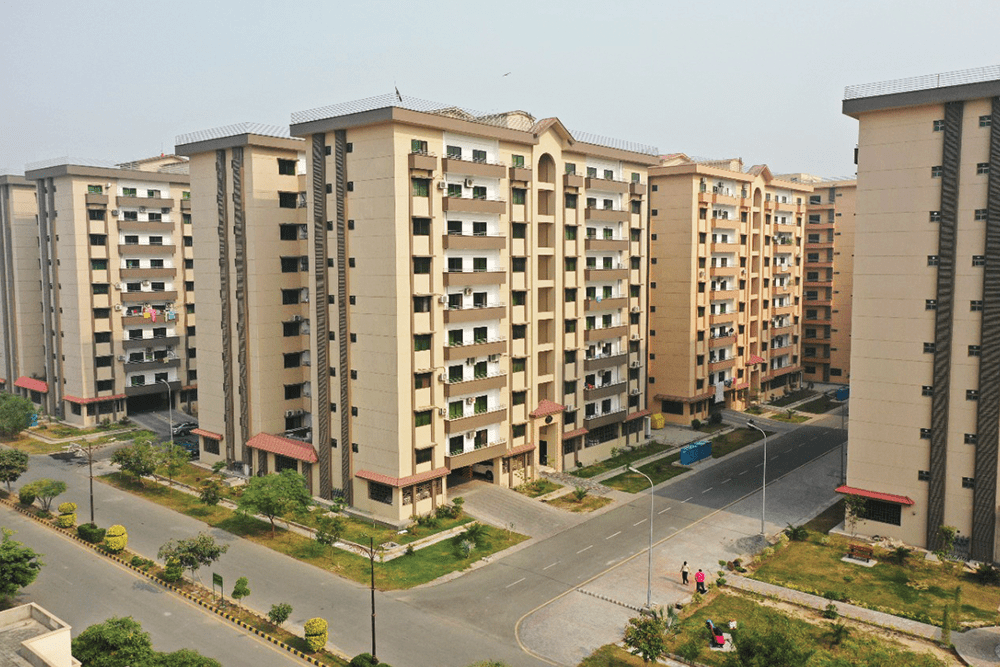
- Vertical housing in urban cores
- Transparent and fast approvals
- Cost-efficient construction models
- On-ground delivery instead of speculation
- Integration of infrastructure and community services
While not a standalone solution, disciplined development, combined with financing reform, can slow the growth of the Housing Deficit 2025.
Policy Directions to Reduce the Housing Deficit
A data-backed strategy to mitigate the Pakistan housing crisis includes:
- Encouraging vertical housing in major cities
- Overhauling the mortgage market in Pakistan
- Incentivising mid-income housing projects
- Introducing rental protection frameworks
- Digitising and accelerating approvals
- Promoting public–private collaboration
- Supporting cost-efficient technologies such as modular and 3D construction
Prompt implementation could stabilise Pakistan’s housing shortage by 2025–2026.
Conclusion: A Decisive Moment for Pakistan’s Urban Future
The Pakistan housing crisis reflects compounded failures: rising costs, weak financing, slow governance, speculative investment, and decades of delayed planning. Yet crises also signal opportunity.
With vertical density, modern mortgage systems, and targeted incentives for affordable housing in Pakistan, the current housing crunch can be transformed into an inclusive growth pathway.
The years 2025 and 2026 will determine whether the Housing Deficit 2025 stabilises, whether the mortgage market in Pakistan becomes functional, and whether Pakistan’s cities evolve into dignified, accessible, and opportunity-driven spaces.